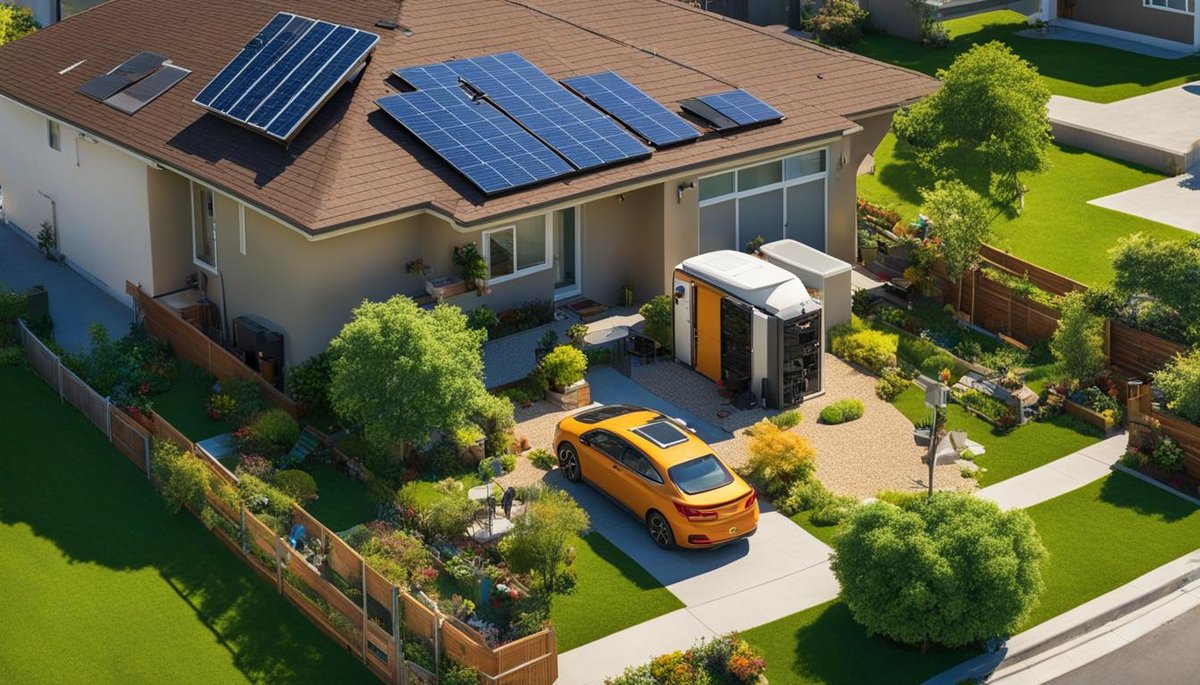
When the grid goes down, or you venture off the beaten path, reliable power becomes your most valuable asset. Solar generators have emerged as a powerful, silent, and eco-friendly solution, offering peace of mind and essential electricity without the noise and fumes of traditional gas generators. Among the many players in this growing market, Patriot Solar Generators often catch the eye, promising resilience and readiness.
But what exactly are you getting with a Patriot Solar Generator? Are they the right fit for your needs, whether it's powering critical medical devices, keeping your fridge cold, or simply charging your phone during an emergency? Let's cut through the marketing jargon and delve into the specifics, helping you make an informed decision.
At a Glance: Key Takeaways on Patriot Solar Generators
- Diverse Models: Patriot offers a range from the ultra-portable Sidekick (299Wh) to the heavy-duty 2500X (expandable up to 6,988Wh).
- Eco-Friendly Power: All models recharge via solar panels, AC wall outlets, or car, operating silently without gas fumes.
- Indoor Safe: Designed for safe indoor use, making them ideal for home backup during outages.
- Plug-and-Play: Generally user-friendly with straightforward controls, appealing to those new to solar power.
- Battery Lifespan: Feature durable lithium-ion or LiFePO4 batteries, with lifecycles ranging from 2,000 to 4,000, ensuring years of service.
- Portability Focus: Most units are designed with mobility in mind, though weights vary significantly by model.
- Potential Trade-offs: Some older models, or the entry-level options, might be perceived as less feature-rich or slower to charge compared to certain competitors for their price point.
Why Solar Power is Your Smartest Backup Plan
Before diving into the Patriot line specifically, it’s worth reiterating the fundamental advantages of solar generators. Unlike their noisy, gas-guzzling counterparts, solar generators are quiet, produce no harmful emissions, and are perfectly safe for indoor use. They store energy in a battery, converting it into standard household AC power through an inverter.
This means no frantic trips to the gas station during a blackout, no worries about carbon monoxide, and the ability to maintain a comfortable indoor environment. Many also support "pass-through" charging, meaning they can power your devices even while the generator itself is recharging—a crucial feature during extended outages. They're also built to stay plugged in and topped off, with intelligent battery management systems preventing overcharging, ensuring they're always ready when you need them most. For those looking to understand the broader landscape of emergency power, exploring a comprehensive emergency power plan is a wise first step.
Patriot's Promise: A Lineup Built for Resilience
Patriot Power Solar Generators, particularly those from 4Patriots, emphasize preparedness and reliability. Their newer lineup showcases a commitment to offering solutions for various scenarios, from small personal devices to larger home appliances. Let's break down their core models:
1. Patriot 2500X: The Heavy-Duty Protector
This is Patriot's flagship model, designed for substantial power needs during longer blackouts.
- Power Output: A robust 2,500W continuous, with a surge capacity of 5,000W. This means it can handle demanding appliances like sump pumps, washing machines, or even an RV air conditioner.
- Battery Lifecycles: Approximately 3,500 cycles, indicating a strong, long-lasting battery.
- Weight: At 48 lbs, it's weighty but still manageable for transport, especially with its built-in handles.
- Included: Comes with a 100W folding solar panel.
- Key Features:
- DualForce™ Recharging: Combines AC and solar input to charge to 70% in less than an hour, significantly faster than many competitors.
- Expandable Capacity: A standout feature, allowing you to connect additional battery packs for a total capacity of up to 6,988Wh, ideal for extended outages.
- Daisy Chainable Solar: You can link multiple solar panels for faster recharging.
- Best For: Whole-room backup, major appliances, RVs, and prolonged power interruptions where sustained power is critical.
- Recharge Speed: ~90 min (AC), <1 hr (AC + solar), 8–10 hrs (with one 100W solar panel).
2. Patriot 1200: The Everyday Lifeline
Striking a balance between power and portability, the 1200 is geared towards daily emergencies and common household needs.
- Power Output: 1,200W, sufficient for medical devices like CPAPs, lights, communication, and small kitchen appliances.
- Battery Type/Lifecycles: Utilizes LiFePO4 battery technology, boasting an impressive ~4,000 cycles—designed for over a decade of use. For those curious about different home battery storage solutions, LiFePO4 is a leading choice.
- Weight: A portable 28 lbs.
- Included: Comes with a 100W lightweight solar panel.
- Key Features: Daisy chainable solar panel input for quicker recharging.
- Best For: Everyday emergencies, powering essential medical equipment, short to moderate outages, and situations requiring easier mobility.
- Recharge Speed: ~1 hr (AC), 7–9 hrs (with one 100W solar panel).
3. Patriot AlphaCase Elite: The Tactical Briefcase
Designed for discretion and rugged portability, the AlphaCase Elite offers power in a unique form factor.
- Power Output: 800W continuous, with a 1,600W surge capacity.
- Battery Lifecycles: ~4,000 cycles.
- Weight: Approximately 24 lbs.
- Included: A 60W lightweight solar panel that cleverly stores inside the case.
- Key Features: Slim, rugged briefcase design where all components fit within the case, making it highly discreet and protected during transport. Not expandable and lacks daisy chaining for solar.
- Best For: Discreet carry, field operations, camping, vehicle emergency kits, and apartment dwellers where space and immediate portability are priorities.
- Recharge Speed: ~1 hr (AC), ~15 hrs (with the included 60W solar panel).
4. Patriot Sidekick: The Mini Workhorse
The most affordable and ultra-portable option, perfect for quick grab-and-go power.
- Power Output: 300W continuous, 360W surge.
- Capacity: 299Wh.
- Battery Lifecycles: Approximately 2,000 cycles.
- Weight: Under 10 lbs, making it incredibly light.
- Included: A 40W folding solar panel that can fit in a backpack.
- Key Features: Extremely compact and lightweight, designed for maximum portability. Not expandable and no daisy chaining.
- Best For: Go-bags, car kits, charging phones and tablets, powering lights, short-term mini-fridge use, and general storm kits.
- Recharge Speed: ~5 hrs (AC), 7–8 hrs (with the included 40W solar panel).
Understanding the Numbers: What Key Specifications Mean for You
When comparing solar generators, understanding a few core metrics is crucial.
- Watt-Hours (Wh): This measures the battery's total capacity. Think of it like the size of a car's fuel tank. A higher Wh means it can run devices for longer. To estimate your needs, multiply a device's wattage (W) by how many hours (hr) you want to run it:
W x hr = Wh. For example, a 50W radio for 4 hours needs 200Wh. - Watts (W) - Continuous & Surge: This indicates how much power the generator can output at any given moment. Continuous wattage is what it can sustain, while surge wattage is a temporary spike it can handle when motors (like those in refrigerators or power tools) start up. Make sure the continuous wattage meets your highest simultaneous power demand, and the surge handles any startup spikes. If you're looking for broader guidance, this guide to choosing a portable power station might also be helpful.
- Battery Type & Lifecycles: Lithium-ion (Li-ion) is common, but Lithium Iron Phosphate (LiFePO4) is increasingly preferred for its longer lifespan (more cycles), greater safety, and better performance in extreme temperatures. Lifecycles tell you how many times the battery can be fully discharged and recharged before its capacity significantly degrades.
- Recharge Times (AC & Solar): How quickly can you get your power back? AC charging (from a wall outlet) is almost always fastest. Solar charging depends heavily on the panel wattage, sunlight conditions, and the generator's maximum solar input.
- Portability: Weight is a big factor. Consider if you need wheels, robust handles, or a compact design for your intended use.
- Expandability: Can you add extra battery packs for more capacity or daisy-chain multiple solar panels for faster charging? This is a significant advantage for larger systems like the 2500X.
Patriot's Value Proposition: Weighing the Pros and Cons
While the newer 4Patriots models offer compelling features, it's also important to consider the broader context and historical reviews, which often focused on a particular model (e.g., the 768Wh/1800W unit).
The Upsides of Patriot Solar Generators:
- Eco-Friendly & Silent Operation: A huge win over gas generators. No fumes, no noise (beyond quiet cooling fans, which can sometimes be noticeable in the older 768Wh model).
- Portable Design: Even the larger units are designed with handles for easier transport compared to bulky gas generators. The AlphaCase and Sidekick are exceptionally portable.
- Long Battery Life: Modern Patriot units boast impressive lifecycles (2,000 to 4,000+), meaning they're built to last.
- User-Friendly: Generally plug-and-play, with simple controls and clear displays, making them accessible even for beginners.
- Durable Build: Often noted for sturdy construction, designed to withstand emergency conditions.
- Safe for Indoor Use: Crucial for comfort and safety during power outages.
- Charge Retention: Can hold a charge for many months (up to 12 in some cases), ensuring readiness.
- Pass-Through Charging: A standard feature, allowing you to power devices while the unit itself recharges.
Potential Downsides and Considerations:
- Price Point (Historically): Older models, like the 768Wh/1800W unit, were sometimes seen as expensive for their capacity when compared to competitors offering more features or higher capacity for a similar or lower price.
- Capacity Limitations (for smaller models): While the 2500X offers significant power, entry-level Patriot models (like the Sidekick or the older 768Wh unit) have limited capacity, meaning they'll run energy-hungry appliances like mini-fridges for only a few hours.
- Solar Charging Speed (Depends on Panel & Max Input): While convenient, solar charging can be slow, especially with smaller included panels (e.g., a 100W panel on a cloudy day can take 10+ hours to charge a 768Wh unit). Faster charging often requires upgrading to more powerful solar panels or daisy-chaining multiple panels. Understanding how solar panels work and optimizing their placement is key.
- Dated Features (for older specific models): The 768Wh/1800W model, for instance, lacked USB-C ports, app integration, or wheels, which are increasingly standard on modern competitors. Newer Patriot models (2500X, 1200) often address some of these points, with better port selection and faster charging.
- Warranty & Support: The 768Wh model had a short 1-year warranty, and customer support was a concern for some users. Always verify the warranty period and read recent reviews on customer service for the specific model you're considering.
- Noisy Cooling Fans (specific instances): While generally silent, the cooling fans on some Patriot models, especially under heavy load, have been noted as noticeable.
Patriot vs. The Competition: A Reality Check
It's vital to compare specific Patriot models against their market rivals. Let's look at how the older Patriot Power 768Wh/1800W model stacked up against leading alternatives to illustrate the competitive landscape. Note: This comparison reflects the specific 768Wh model reviewed, not necessarily the newer, more advanced 4Patriots models like the 2500X or 1200.
| Feature | Patriot Power (768Wh/1800W) | EcoFlow Delta 1800 | Jackery Explorer 2000 Pro | Bluetti AC200P | Goal Zero Yeti 1500X | Anker SOLIX C1000 |
|---|---|---|---|---|---|---|
| Price | ~$2,497 | ~$1,400 | ~$1,800 | ~$1,600 | ~$1,800 | ~$1,000 |
| Capacity (Wh) | 768Wh | 1,300Wh (nearly double) | 2,160Wh (much higher) | 2,000Wh (much higher) | 1,516Wh (much higher) | 1,056Wh (higher) |
| Output (W) | 1,800W | 1,800W (3,300W surge) | 2,200W | 2,000W | 2,000W | 1,800W (2,400W surge) |
| AC Charge Time | 3.5 hours | 2 hours | 2.5 hours | ~4.5 hours | 3 hours | ~1 hour |
| Max Solar Input | 240W | 400W | 1,400W | 700W | 600W | 600W |
| Battery Type | Lithium-ion | Li-ion | Li-ion | LiFePO4 | Li-ion | LiFePO4 |
| Lifecycles | 2,500 | 800+ | 1,000 | 3,500 | 500 | 3,000 |
| Key Features | - | App, fast AC, X-Boost | App, wheels, fast solar | Touchscreen, LiFePO4 | App, USB-C, robust build | App, compact, fast AC, LiFePO4 |
| Warranty | 1 year | 2 years | 3 years | 2 years | 2 years | 5 years |
| This comparison table vividly shows that the 768Wh Patriot model faced stiff competition, often being outmatched in capacity, charging speed, features, and warranty length, especially considering its higher price point at the time of review. This highlights the importance of comparing specific models within Patriot's current offerings against contemporary rivals. The newer 4Patriots 2500X and 1200 models, with their LiFePO4 batteries, faster AC charging, and expandability, certainly represent a more competitive offering within the market. |
Choosing Your Patriot Solar Generator: A Three-Step Framework
With Patriot's diverse lineup, how do you pinpoint the right one for you?
Step 1: Decide on Your Must-Have Essentials
Start by listing every appliance and device that is absolutely critical during an outage or when off-grid. Think:
- Medical: CPAP machines, oxygen concentrators, essential refrigeration for medicines.
- Food Preservation: Refrigerator, freezer.
- Communication: Phones, laptops, radio.
- Lighting: LED lamps, flashlights.
- Comfort: Small fan, electric blanket.
- Water: Sump pump, water filter.
Once you have your list, find the wattage (W) of each device (usually on a label or in the manual). Then calculate your total desired watt-hours (Wh) by multiplying wattage by how many hours you need to run each device. This will give you a clear target for the generator's capacity.
Step 2: Balance Portability vs. Power
Where and how will you use your solar generator most often?
- Stationary Home Backup? A larger, heavier unit like the 2500X might be ideal, especially with its expandability. Wheels become a major plus for heavier units.
- Mobile Use (Camping, RV, Field Operations)? The 1200 or AlphaCase Elite offer a good balance of power and portability.
- Ultra-Portable Go-Bag or Car Kit? The Sidekick is perfect for quick grabs and minimal power needs.
Don't buy an oversized unit if you only need to charge phones, and don't undersize if you plan to power a fridge.
Step 3: Plan for Recharging
Consider your typical sun exposure and how quickly you'll need to replenish power during an extended outage.
- Sunny Location, Extended Use: Models like the 2500X or 1200 with daisy-chainable solar inputs allow you to connect multiple panels for significantly faster solar recharging.
- Limited Sunlight or Urgent Needs: Prioritize models with fast AC charging (like the 2500X's DualForce™) and consider having extra fuel for a small gas generator for critical rapid recharges, if appropriate for your situation.
- Panel Placement: Always ensure your panels are angled directly towards the sun and free of obstructions for maximum efficiency.
Maximizing Your Investment: Expert Tips & Best Practices
Getting a solar generator is just the first step. Knowing how to use it efficiently will extend its life and ensure you get the most out of your power.
- Prioritize Essentials First: During an outage, power your most critical devices (medical, communication, lights) before plugging in non-essentials.
- Use Appliances in Cycles: For high-draw items like refrigerators, run them until they're cool, then unplug them and cycle other devices. This conserves battery life. Listen for the compressor to kick in—that's when it's drawing the most power.
- Stay Topped Off: When grid power is available, keep your solar generator fully charged. This ensures it's always ready. Modern units have built-in battery management to prevent overcharging.
- Utilize Daisy Chaining (2500X, 1200): If your model allows, connect multiple solar panels to dramatically reduce solar recharge times, especially beneficial for longer blackouts.
- Expand When Needed (2500X): Don't hesitate to invest in expandable battery packs for the 2500X if you anticipate very long outages or have growing power needs.
- Protect from Elements: Always use the generator indoors or under cover. Solar panels can be outside, but generators should be protected from rain, extreme heat, or cold.
- Store Smart: For long-term storage, charge your generator to about 80% capacity and top it off every 3-6 months. Avoid storing it completely drained or in extreme temperatures.
- Upgrade Lighting to LED: If you haven't already, switch all your emergency lighting to LED bulbs. They draw significantly less power than incandescent or even CFL bulbs, preserving your generator's battery life.
- Know Your Numbers: Before an outage, create a simple chart of your essential devices and their wattages. This helps you avoid overloading your generator and plan your power usage effectively.
Common Pitfalls to Sidestep
Even with the best equipment, mistakes can happen. Awareness is your best defense.
- Waiting for the Outage to Prepare: The worst time to learn how to use your generator is when the lights go out. Fully charge, test, and practice operating your unit beforehand.
- Overloading the Unit: Never exceed your generator's continuous wattage limit. Doing so can trip breakers, damage the unit, or even connected devices.
- Bad Solar Setup: Panels must be angled optimally towards the sun and kept clean. Shade, even partial, can drastically reduce efficiency.
- Neglecting Storage Care: Leaving a lithium battery completely drained or storing it in extreme temperatures (hot garage, freezing shed) will shorten its lifespan.
- Expecting Whole-House Coverage: Most solar generators, even larger ones, are designed to power critical appliances, not an entire home simultaneously. Manage your expectations and prioritize.
Maintaining Your Patriot for Peak Performance
A little care goes a long way in ensuring your Patriot Solar Generator is ready when duty calls.
- Clean Solar Panels Weekly: Dust, dirt, and debris can significantly reduce charging efficiency. A quick wipe-down with a damp cloth is usually enough.
- Store in a Cool, Dry Place: High heat accelerates battery degradation. A cool basement or closet is ideal.
- Charge Regularly: Even in storage, charge your unit every 6 months to at least 80% to maintain battery health.
- Inspect Cables: Periodically check all cables and connections for fraying, cracks, or damage. Replace any compromised cables immediately.
- Use a Surge Protector: For sensitive electronics, connecting them through a quality surge protector is always a good idea.
- Avoid Overloading: Stick to the generator's specified wattage limits.
- Keep Unit Dry: Water and electronics don't mix. Ensure your generator is protected from rain, spills, and excessive humidity.
- Monitor Battery Health: Pay attention to the unit's display. If you notice significantly reduced runtimes or abnormal charging behavior, consult the manual or customer support.
- Tighten Connections: Ensure all plugs and cables are firmly seated to prevent intermittent power or damage.
- Read the Manual: This cannot be stressed enough. Your specific Patriot model's manual contains vital information for optimized setup, use, and troubleshooting. For more general guidance, you can also check out this Patriot solar generator guide.
Making Your Informed Decision
Understanding Patriot Solar Generators means recognizing their strengths, acknowledging their specific models' nuances, and being aware of the broader market landscape. Patriot offers robust, user-friendly solutions that excel in preparedness and off-grid scenarios, particularly with their newer, more feature-rich models like the 2500X and 1200.
By carefully assessing your personal power needs, balancing portability with capacity, and considering recharging strategies, you can confidently choose a Patriot Solar Generator that will serve as a reliable beacon of power whenever you need it most. Do your homework, compare specific models, and invest in the peace of mind that comes with being prepared.