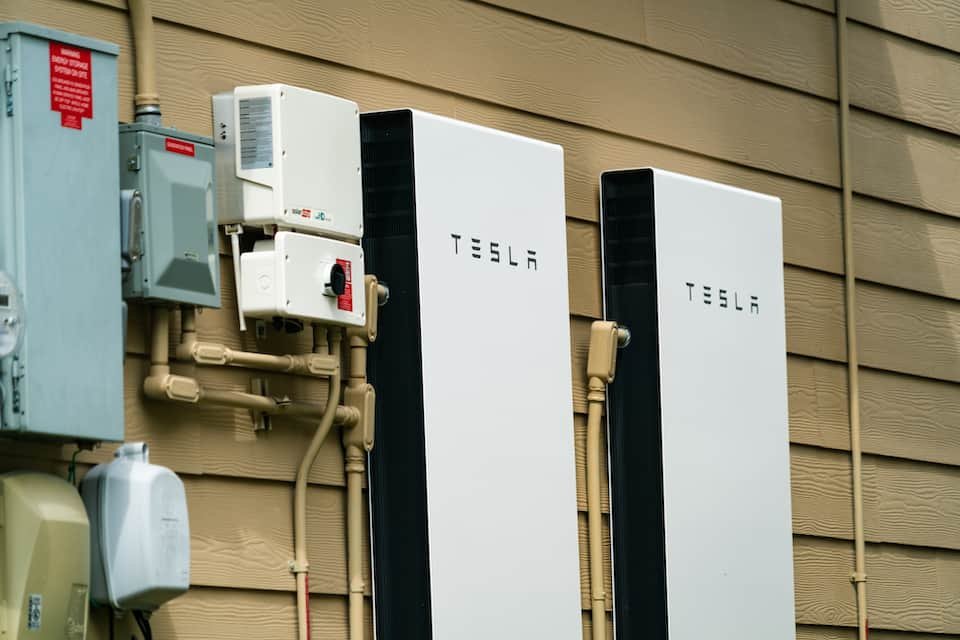
Imagine the lights flickering, the fridge humming, your laptop charging – all powered by a silent, unseen force. Or perhaps you're dreaming of energy independence, a home running on sunshine even when the grid goes dark. In both scenarios, a pair of unsung heroes is working tirelessly behind the scenes: batteries and inverters. Understanding Battery & Inverter Technology Explained is key to unlocking reliable, efficient, and often cleaner power for your home, whether you're dealing with sudden outages or embracing a future powered by renewables.
These aren't just technical components; they're the brains and brawn of your modern electrical system, bridging the gap between raw energy sources and the sophisticated devices that fill our lives. They're what allow you to convert stored energy into usable electricity, run sensitive electronics without a hitch, and even send excess power back to the grid.
At a Glance: Powering Your Home with Batteries & Inverters
- Inverters are Converters: They transform direct current (DC) from batteries, solar panels, or generators into alternating current (AC) for household devices.
- The "Brain" of Energy Systems: Inverters manage energy flow, ensuring your home gets power when needed, even charging and discharging batteries optimally.
- Types for Every Need: From pure sine wave (for sensitive electronics) to hybrid models (for solar and battery integration), there's an inverter designed for specific applications.
- Solar & Battery Synergy: In hybrid solar-plus-battery setups, a single smart inverter efficiently handles solar power, battery storage, and grid interaction.
- DC-Coupled is King for New Solar: For new installations, directly connecting solar to batteries (DC-coupling) via a hybrid inverter offers superior efficiency and cost savings.
- Choosing Wisely Saves Money: Matching the right inverter to your power needs, desired features, and system type (new or retrofit) is crucial for long-term efficiency and functionality.
- Smart Power is Here: Modern inverters feature MPPT for solar optimization, digital controls, and smart app integration for real-time energy management.
Cracking the Code: What Exactly Does an Inverter Do?
Think of an inverter as a crucial translator in your home's electrical language. Most power sources we generate or store – like solar panels, batteries, and even some generators – produce Direct Current (DC) electricity. This is the kind of power you find in a car battery or a flashlight. However, almost every appliance in your home, from your refrigerator to your TV to your smartphone charger, runs on Alternating Current (AC) electricity – the standard found in wall outlets.
An inverter's primary job is to bridge this gap: it takes that DC power and meticulously converts it into AC power, making it usable for all your everyday electrical devices. Without an inverter, your solar panels or home battery would be like a library full of books written in a language no one in your house understands – lots of valuable information, but inaccessible.
The Inner Workings: How an Inverter Transforms Power
This isn't just a simple flip of a switch. The conversion process inside an inverter is a sophisticated dance of electronics:
- Receiving DC Power: The inverter first takes in the raw DC power.
- Chopping and Pulsing: Fast electronic switches inside the inverter rapidly turn the DC power on and off, creating a series of quick pulses.
- Shaping the Wave: Through a process called Pulse Width Modulation (PWM) control, these pulses are carefully shaped and smoothed to resemble an AC waveform. Think of it like taking sharp, square blocks and molding them into a gentle, rolling wave.
- Filtering for Clean Power: Finally, filters clean up the output, ensuring the AC power delivered to your appliances is stable, smooth, and free of electrical "noise." This clean power is essential, especially for sensitive electronics.
This intricate process ensures that the power leaving your inverter is just as reliable and consistent as the power you'd get from the utility grid, often even cleaner.
The Many Faces of Power: Different Types of Inverters
Not all inverters are created equal. Depending on your needs, budget, and the sensitivity of your appliances, you'll encounter several key types, each with its own strengths and ideal applications.
1. Pure Sine Wave Inverters: The Gold Standard
- What they are: These inverters produce an AC waveform that's virtually identical to the power supplied by your utility grid. It's a smooth, clean, and consistent "pure sine wave."
- Why they matter: This clean output is crucial for sensitive electronics (like computers, medical equipment, and modern TVs) and anything with an AC motor (refrigerators, microwaves, power tools). Appliances run cooler, quieter, and more efficiently, prolonging their lifespan.
- Best for: Homes, offices, hospitals, data centers – essentially anywhere you need reliable, high-quality power for a wide range of devices.
2. Modified Sine Wave Inverters: The Budget-Friendly Option
- What they are: Instead of a smooth wave, modified sine wave inverters produce a stepped or "chopped" approximation of an AC waveform. It's simpler and less expensive to produce.
- Why they matter (and their limits): While they can power many basic resistive loads (like incandescent lights, heating elements, or older chargers), they are not ideal for sensitive electronics or induction motors. These devices might run less smoothly, generate noise or excessive heat, and could even be damaged over time.
- Best for: Basic, non-sensitive loads in RVs, cabins, or for temporary power needs where cost is the primary concern and device compatibility has been checked.
3. Off-Grid Inverters: Your Gateway to Energy Independence
- What they are: Designed for standalone systems, these inverters are the heart of remote power setups where there's no connection to the main utility grid. They work in conjunction with batteries and solar panels (or other DC sources).
- Key Features: Often include built-in battery charging controllers, extensive protection functions, and robust designs to ensure reliable power in challenging environments.
- Best for: Cabins, remote homes, mobile applications, and any location without grid access where you need self-sufficient power. For those interested in self-sufficiency, exploring resources like the Patriot Generator Solar hub can provide deeper insights into setting up robust off-grid solutions.
4. Grid-Tied Inverters: Integrating with the Utility
- What they are: These inverters are specifically designed to connect your solar array directly to the utility grid. They convert solar DC power into AC power that matches the grid's frequency and voltage.
- Why they matter: When your solar panels produce more electricity than your home consumes, a grid-tied inverter can send the excess power back to the utility, often earning you credits or reducing your electricity bill (known as net metering). They typically don't include battery charging capabilities.
- Best for: Homes and businesses looking to reduce their electricity bills by using solar power and potentially selling excess back to the grid, without a need for battery backup.
5. Hybrid Inverters: The Best of Both Worlds
- What they are: Modern and versatile, hybrid inverters combine the functions of both grid-tied and off-grid inverters. They can connect to the grid, manage solar production, and charge/discharge a battery bank.
- Key Benefits: During a grid outage, they can automatically switch to battery power, providing backup. They also allow for smart energy management, optimizing power flow between solar, battery, grid, and home loads to minimize costs.
- Best for: New solar + battery installations, homeowners seeking energy independence with grid backup, and those looking to optimize their energy consumption and potentially participate in smart grid programs. These are often the go-to for contemporary solar solutions.
The Smarter Side: Modern Inverter Advancements
Inverter technology isn't standing still. Recent innovations have made them more efficient, reliable, and intelligent than ever before:
- MPPT Control (Maximum Power Point Tracking): This advanced feature is crucial for solar systems. MPPT controllers constantly adjust the electrical load on solar panels to ensure they operate at their peak power output, maximizing the amount of energy harvested from the sun, even under varying conditions (like partial shading or temperature changes).
- Digital Control: Modern inverters use sophisticated digital signal processors (DSPs) for higher accuracy in waveform generation, faster response times, and reduced electrical noise. This translates to cleaner power and greater reliability.
- Improved Cooling Systems: Efficient cooling is vital for inverter longevity. Advances in heat sink design, fan technology, and thermal management prevent overheating, extending the life of your unit and ensuring consistent performance.
- Integrated Monitoring & AI: Many new inverters come with built-in Wi-Fi or cellular connectivity, allowing you to monitor your system's performance via a smartphone app. Some even incorporate AI to make real-time decisions based on weather forecasts, grid pricing, and your household's energy habits, optimizing energy flow for maximum savings.
Where Inverters Work: Real-World Applications
Inverters are ubiquitous, quietly powering everything from critical infrastructure to everyday conveniences:
- Home Backup Systems: Paired with batteries, they provide seamless power during grid outages, keeping essential appliances running.
- Uninterruptible Power Supplies (UPS): Critical for medical equipment, data centers, and IT infrastructure, UPS systems use inverters to provide instantaneous backup power, preventing data loss and operational disruption.
- Solar PV Systems: The most common application, converting solar DC into usable AC for homes and businesses.
- Industrial Machines: Many complex industrial processes and sensitive machinery rely on inverters for precise motor control and stable power.
- Telecom Base Stations: Ensuring continuous operation for cell towers and communication infrastructure.
- Portable Power Supplies: From car inverters that power laptops on the go to larger portable power stations, they bring AC power wherever you need it.
- Electric Vehicles (EVs) & Charging: Inverters are fundamental components within EVs, converting DC battery power into AC to drive motors, and also play a role in fast-charging stations.
The Home Powerhouse: Inverters in Solar + Battery Systems
When you combine solar panels with a battery storage system, the inverter becomes the central intelligence hub – the "brain" that orchestrates the entire flow of energy. It's not just converting power; it's managing it, deciding where energy should go at any given moment.
A battery inverter's role here is multi-faceted:
- DC to AC Conversion: Just like any inverter, it turns the DC electricity from your solar panels and battery into AC for your home.
- Battery Management: It intelligently charges the battery when solar production is high or electricity is cheap (if connected to the grid) and discharges it when solar is low, or electricity is expensive, based on your programming or AI optimization.
- Grid Communication: It talks to the grid, either sending excess power back or pulling power from the grid when needed, always aiming to optimize performance and reduce your energy costs.
- Blackout Protection: In hybrid or off-grid systems, it's the component that ensures your home keeps running smoothly when the utility grid goes down, seamlessly switching to battery power.
One System, Two Approaches: Inverter Types for Solar + Battery
For solar-plus-battery systems, two main inverter configurations dominate:
Traditional (String) Inverters: The Legacy Setup
- How they work: In older or retrofit solar systems, you'd typically find a dedicated solar inverter for your panels (converting solar DC to AC for the home/grid) and a separate battery inverter for your battery bank (converting battery DC to AC, and often AC back to DC for charging).
- Pros: Can be suitable for adding batteries to an existing solar system that already has a string inverter.
- Cons: Less efficient due to multiple conversions and separate components, involves more complex wiring, and can be more expensive to install and maintain over time. Think of it as needing two interpreters for one conversation.
Hybrid Inverters: The Modern, Integrated Solution
- How they work: As the name suggests, a single hybrid inverter handles everything: it takes DC power from your solar panels, manages your battery bank (charging and discharging), and interacts with the utility grid. It's an all-in-one smart energy manager.
- Pros:
- Smarter Control: Optimized energy flow between all components.
- Simpler Installation: Fewer components, less wiring, easier setup.
- Cost-Effective: Often cheaper overall due to fewer distinct pieces of hardware.
- Backup Capabilities: Most hybrid inverters include automatic blackout protection.
- Best for: Virtually all new solar + battery installations due to their efficiency, intelligence, and streamlined design.
Power Flow Explained: DC-Coupled vs. AC-Coupled Systems
Beyond the type of inverter, how your solar panels and batteries are connected fundamentally impacts your system's efficiency and complexity.
DC-Coupled Systems: The Direct Route
- How it works: Solar panels produce DC energy, which feeds directly into your battery bank. The hybrid inverter then converts this DC power from the battery (or directly from the solar panels, if bypassing the battery) into AC power for your home.
- The Flow: Solar DC -> Battery DC (or Inverter DC input) -> Inverter converts to AC -> Home AC.
- Key Advantages:
- Higher Efficiency: Fewer energy conversions mean less energy loss. Solar DC goes directly to battery DC with minimal conversion steps.
- Optimal for New Builds: Ideal for brand new solar + battery installations.
- Efficient Battery Charging: Batteries are charged directly with DC, which is inherently more efficient for DC storage.
- Lower Component Costs: Often requires fewer distinct components, streamlining the system.
- Best for: New solar + battery systems where maximizing efficiency and simplifying the setup are priorities.
AC-Coupled Systems: Adding On to What's There
- How it works: In this setup, solar panels send DC power to a solar inverter, which converts it to AC for your home or the grid. If you also have battery storage, a second inverter (a battery inverter) then converts this AC power back to DC to store it in the battery. When the battery needs to power your home, that DC is converted again to AC.
- The Flow: Solar DC -> Solar Inverter converts to AC -> Home AC or Battery Inverter converts AC back to DC -> Battery DC -> Battery Inverter converts DC to AC -> Home AC.
- Key Advantages:
- Retrofit Friendly: Excellent for adding battery storage to an existing solar panel system that already has a grid-tied solar inverter. You don't have to replace your original solar inverter.
- Key Disadvantages:
- Less Efficient: Involves multiple AC-DC and DC-AC conversions (double conversion), leading to higher energy losses.
- More Complex Wiring: Requires more intricate wiring to manage the multiple conversion stages.
- Higher Installation Costs: Often involves two separate inverters and more labor.
- Best for: Homeowners who already have a solar system and want to add battery backup without a complete overhaul.
Making the Smart Choice: How to Select the Right Inverter
Choosing an inverter isn't a one-size-fits-all decision. Your specific needs will dictate the best fit. Here’s a breakdown of crucial factors to consider:
1. Total Load Power: How Much Power Do You Need?
- Calculating Your Watts: List all the appliances you intend to power simultaneously. Note their starting (surge) wattage and running (continuous) wattage. The inverter needs to handle both. Starting wattage, especially for motors (refrigerators, pumps), can be 2-7 times higher than running wattage for a brief moment.
- Continuous Power: The inverter's continuous power rating must exceed the sum of all running wattages of your concurrently operating appliances.
- Surge Power: Ensure the inverter's surge rating can handle the highest starting load of any single appliance.
- Future-Proofing: It’s wise to build in a buffer, perhaps 20-30% above your calculated peak load, to account for future additions or unexpected demands.
2. Output Waveform: Pure Sine Wave or Modified Sine Wave?
- Sensitive Electronics: If you plan to power computers, medical devices, modern TVs, audio equipment, or anything with a sensitive motor (refrigerators, microwaves, variable speed tools), a pure sine wave inverter is essential.
- Basic Loads: For simple loads like incandescent lights, heating elements, or basic phone chargers, a modified sine wave inverter might suffice, but proceed with caution and verify compatibility. When in doubt, go pure sine wave.
3. Input Voltage and Battery Type: Matching Your Power Source
- Battery Voltage: Your inverter must match the voltage of your battery bank (e.g., 12V, 24V, 48V, or higher for modern lithium systems).
- Battery Chemistry: While less about the inverter itself, consider your battery type (lead-acid, lithium-ion). Many modern hybrid inverters are designed to work seamlessly with various battery chemistries and often include specific charging profiles.
- Solar Input: If it's a hybrid inverter, ensure its MPPT controller can handle the voltage and current range of your solar array.
4. Special Features and Functionality: Beyond Basic Conversion
- MPPT Controller: Absolutely essential for solar systems to maximize energy harvest.
- Battery Charger: For hybrid or off-grid inverters, a built-in battery charger is crucial.
- Automatic Transfer Switch (ATS): Allows seamless switching between grid and battery power during outages.
- LCD Display: For easy monitoring of status, voltage, power output, and error codes.
- Remote Monitoring/App Integration: For real-time performance tracking and control from your smartphone or computer.
- Grid-Tied Capabilities: If you want to sell excess solar power back to the utility.
- Blackout Protection: Critical for home backup systems.
- Parallel Capability: For some systems, you can connect multiple inverters in parallel to increase total power output.
5. Certifications and Warranty: Ensuring Quality and Safety
- Safety Certifications: Look for recognized safety certifications (e.g., UL, CE) to ensure the inverter meets industry safety standards.
- Warranty: A good warranty (typically 5-10 years for quality inverters, sometimes longer for hybrid models) provides peace of mind.
The "Why": Why Choosing the Right Inverter Matters
The inverter isn't just another box in your power system; it's a strategic investment that directly impacts your energy future.
- Efficiency: A well-chosen inverter, especially a hybrid one with DC coupling, can dramatically reduce energy losses. Over 10-15 years, these small efficiency gains can translate into thousands of dollars saved, making a significant difference to your wallet and your carbon footprint.
- Compatibility: Ensuring your inverter and batteries are compatible is non-negotiable. An integrated system where components are designed to work together seamlessly will perform better, last longer, and avoid frustrating compatibility issues.
- Functionality: The inverter dictates what your power system can actually do. Do you need reliable blackout protection? Do you want to participate in Virtual Power Plant (VPP) programs, where your battery helps stabilize the grid and earns you money? Does your system need to intelligently optimize energy use based on time-of-use rates? These capabilities are largely governed by the intelligence and features of your inverter.
- Smart Control Integration: In an increasingly smart home, your inverter is no exception. Models with AI or app integration can make real-time decisions, learning from your energy habits, responding to grid signals, and even factoring in weather forecasts to optimize battery charging and discharging. This level of smart control moves your home from simply consuming energy to intelligently managing it.
Common Questions About Inverters & Batteries
"Do I always need a pure sine wave inverter?"
Not always, but it's highly recommended for most modern homes. If you only power basic resistive loads like incandescent lights or basic heating elements, a modified sine wave might work. However, for sensitive electronics, appliances with motors, or anything you value, a pure sine wave inverter is the safer, more efficient, and often required choice to prevent damage and ensure optimal performance.
"Can I just plug my solar panels directly into my house?"
No, absolutely not. Solar panels produce DC power, and your house runs on AC. Plugging DC directly into AC outlets is extremely dangerous and could damage your appliances, wiring, and even cause fires. An inverter is the essential, safety-critical component for converting solar DC to usable household AC.
"How long do inverters last?"
The lifespan of an inverter varies based on type, quality, usage, and environmental conditions. Generally, string inverters might last 10-15 years, while microinverters (a related technology, not covered in detail here, but worth noting for solar) can last 20-25 years. Hybrid inverters, with their advanced technology and often robust build, typically also aim for a 10-15+ year lifespan. Good ventilation and avoiding extreme temperatures can extend their life.
"What's the biggest mistake people make when choosing an inverter?"
Underestimating their power needs. People often forget about surge wattage for motor-driven appliances (like fridges or pumps) or don't account for all the devices they might want to run simultaneously. This leads to an undersized inverter that trips frequently or can't power essential items when needed most. Always calculate your peak and continuous loads carefully, and add a healthy buffer.
Your Power-Smart Future Starts Here
Understanding Battery & Inverter Technology Explained isn't just about technical jargon; it's about empowering yourself to make informed decisions for your home's energy future. Whether you're aiming for full energy independence, reliable backup power, or simply a smarter, more efficient way to manage your electricity, the inverter is at the heart of it all.
For new solar + battery systems, the message is clear: prioritize a hybrid inverter with DC coupling for maximum efficiency, seamless integration, and long-term savings. If you're looking to add a battery to an existing solar setup, an AC-coupled battery inverter can be a pragmatic and effective retrofit solution, provided it integrates smoothly with your current system.
By carefully considering your power needs, desired functionality, and the efficiency gains offered by modern technology, you can select an inverter that not only meets your current demands but also positions your home for a resilient and sustainable energy future. The grid may flicker, but with the right battery and inverter working in harmony, your home power doesn't have to.